Cleaning Roman bronze coins safely
How to clean Roman bronze coins without destroying the patina, recognise and treat bronze disease, and store the find so it lasts another two thousand years.
Roman bronze coins are common UK detecting finds, especially the small AE3 and AE4 issues of the 4th century. Cleaning bronze well requires a different mindset to silver — the chemistry is different, the diseases are different, and the diagnostic information lives in different places on the coin.
The headline differences from silver
- Bronze patina is even more important than silver patina.The green / olive / red toning is the calling card of an authentic Roman bronze; over-cleaning it tells collectors and FLOs the coin has been stripped.
- Bronze can have active disease.“Bronze disease” (pale green powder, often dusty) is an active chemical reaction that can keep destroying the coin in storage. It needs identifying and stabilising.
- The legend often runs around the bust.Diagnostic for ruler attribution. Cleaning routines need to protect the lettering above all.
Patina types and what they tell you
Smooth olive-green / brown
Stable, even, “chocolate” or olive-green patina is the ideal. The bronze has converted to copper carbonates and oxides at a manageable rate; the surface beneath is preserved. Leave it alone.
Dark blackened with red highlights
Common on bronzes from acid or peaty soil. Also stable. Sometimes called “black patina” or “sandy patina” depending on local soil. The red highlights are copper oxide. Don’t try to even it out — the contrast is desirable.
Bright green and powdery
Warning sign — this can be bronze disease (cuprous chloride reaction). Powdery green spots that appear after the coin is in your collection are particularly concerning. Bronze disease spreads if not treated.
Mineral encrustation
Hard white/grey deposits, often calcite or sand cemented to the surface. These are stable and protect the surface underneath, but they obscure detail. Removable carefully if necessary.
The safe routine for a typical Roman bronze
- Photograph before cleaning. Always.
- Brush off loose soil with a soft, dry brush.A soft toothbrush or a sable artist’s brush. Loose grit first — never let it scrape across the surface during subsequent wet stages.
- Distilled water soak.24–48 hours in distilled water. Most adherent soil softens enough to lift with a soft brush after a soak.
- Gentle brushing while wet.Soft toothbrush, circular gentle motion. Watch the brush for any green dust (that’s bronze disease showing up — stop and treat separately, see below).
- Rinse, gently pat dry, air-dry fully. The bronze must be completely dry before storage. Moisture in storage is what triggers bronze disease cycles.
- Photograph and identify.
For mineral encrustation
If the soak doesn’t shift it:
Olive oil soak
Long-term, low-aggression. Submerge the coin in olive oil for weeks or months. The oil penetrates the encrustation, softens deposits, and is gentle on the patina. Periodically rinse with mild soap, dry, and reassess.
Wooden pick mechanical removal
A sharpened cocktail stick, used carefully under magnification. Pick away at deposits in a controlled way. Slow. Patient. Practise on a worthless coin first.
Bronze disease — what to do
Bronze disease is the persistent low-level reaction of cuprous chloride with humidity. It eats bronze coins from the inside out and can transmit to neighbouring coins in storage.
Signs:
- Pale green powder, often in pits or recesses.
- Powder that appears after the coin has been in your collection.
- Acrid smell when the coin is in a closed container.
Treatment (basic approach):
- Isolate. Move the affected coin away from other bronzes immediately. Bronze disease is mildly contagious in humid conditions.
- Distilled water rinse. Wash off the powdery deposits.
- Sodium sesquicarbonate soak.A weak alkaline solution (about 1 tablespoon per litre) for 1–2 weeks, changing the solution every few days. This neutralises the cuprous chloride.
- Rinse, dry thoroughly.
- Long-term storage in a dry environment. Silica gel sachets in your storage box. Bronze disease only progresses in the presence of moisture.
For valuable bronzes with disease, send to a conservator. The cost is small relative to the find’s value.
Storing Roman bronze properly
- Dry environment. Silica gel sachets if you live somewhere humid.
- Inert materials — paper envelopes, polypropylene flips, glass-fronted trays. Not PVC, which off-gasses and reacts with bronze over years.
- Stable temperature. Avoid attics and unheated outbuildings — bronze disease cycles with temperature swings.
- Individually housed. Don’t pile bronzes together; the green dust transfers.
Identifying worn Roman bronze
Most 4th-century AE3/AE4 issues come up worn beyond easy identification. Diagnostic features in order of usefulness for the engine:
- The reverse type (FEL TEMP REPARATIO, GLORIA EXERCITVS, VICTORIAE DD AVGG, etc).
- The mint mark in the exergue (TRP, ARLA, RP, LON, etc).
- The general bust style (radiate, diademed, pearl-diademed).
- The diameter (16–18 mm for AE3, <15 mm for AE4).
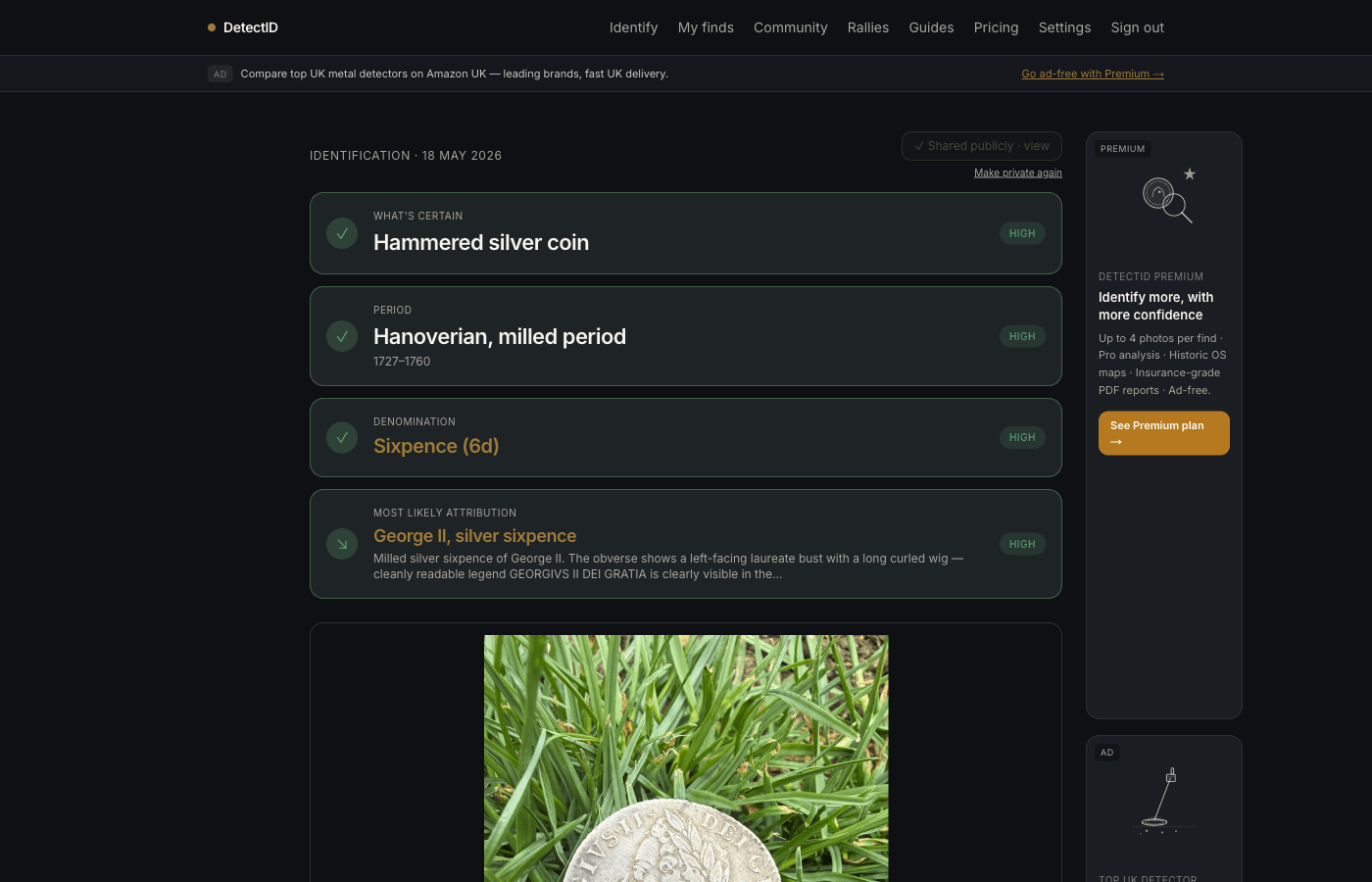
DetectID’s engine will work through these systematically. The reasoning chain on your result page shows exactly which diagnostic features it could read.
The honest reality of Roman bronze cleaning
A lot of Roman bronze finds are too worn to be highly identifiable even after cleaning. That’s fine. Record them with PAS as “Late Roman AE3, ruler indeterminate” and they still contribute to the archaeological record. Don’t over-clean chasing detail that isn’t there.
Worked example
Find: small bronze, 17 mm, dark green patina, visible bust on the obverse, partial figure of Victory on the reverse, visible legend fragment around the bust starts with FL IV.
Routine: photograph dirty. Soft dry brush. Distilled water soak 24 hours. Gentle wet brush. Air dry. Photograph again. Upload to DetectID.
Engine returns: “Probable Constantius II (FL IVL CONSTANTIVS), Reece Period 17, c. 337–361 CE, VICTORIAE DD AVGG QNN reverse”. Medium confidence. PAS reference written and submitted alongside the find.
Useful resources
- Late Roman bronze identification guide — our reference for the period.
- Photographing finds for identification — for the post-clean shot.
- Reporting finds to PAS — the standard archaeological record.
Next steps
- For silver coins: Cleaning hammered silver safely.
- Getting a worn Roman bronze identified: How DetectID handles worn and partial coins.
Try DetectID on a real find
Upload a photo and we’ll return a calibrated shortlist with period, denomination, ruler and full reasoning chain.
Identify a find