A detectorist's year with DetectID — seasonal patterns
Spring rallies, summer beaches, autumn ploughed fields, winter cleaning — how to use DetectID through the four seasons of UK detecting.
Detecting in the UK has rhythms — rallies in spring, beach season in summer, the post-harvest plough rush in autumn, the cleaning and cataloguing months over winter. DetectID is built for that calendar. This is a walk through the year with platform-specific suggestions for each season.
Spring — March to May
What’s happening on the ground
Permissions become walkable as fields drain. Spring crops come up; pastures green. Rallies kick into gear from late March, with the spring rally season peaking in April and May. Permissions that were too wet over winter become accessible again.
What to do on DetectID
- Start a fresh detecting session for each new permission.Spring is when you’ll often be revisiting permissions you haven’t walked since autumn — a new session per permission keeps the year’s record clean.
- Check the rally calendar. Public rallies on /rallies. Spring rallies often have charity tie-ins; worth supporting.
- If you organise a rally, this is the time.Spring rallies attract good attendance because everyone’s eager after a winter break. Higher chance of clearing the 10+attendees + 20+finds threshold for the Rally Captain perk.
- Stick to 1 km precision on new finds.New permissions are precious; don’t pin precisely on public-shared spring finds.
What the engine tends to see in spring
Spring stratigraphy: top-soil finds rotated by winter ploughing in places that didn’t get walked. A lot of post-medieval (Georgian copper, Victorian silver, modern) because that’s the top-layer population. Hammered finds when permissions have been ploughed; lighter on worked-stone if you’re on pasture.
Summer — June to August
What’s happening on the ground
Summer is harder for field detecting — crops are up, permissions limited to stubble after harvest. Beach detecting comes into its own. Iron Age territory if you have permission on hill-tops; Roman material on stone-built sites. Some of the best Detectival-style events happen mid-summer when stubble fields become rally-able after early harvests.
What to do on DetectID
- Switch to beach mode mentally. Read ourbeach detectingpost. Set Region to the coast you’re working.
- Watch the tides.Spring tides expose the most ground. We’ll soon have a tide widget built in; until then, use BBC Weather or the “My Tide Times” app.
- Tag finds with summer-specific notes.“Beach low tide”, “dunes wrack line”, “stubble field after early harvest” — future-you will appreciate the context.
- Update your public profile bio for summer.If you’re a beach-only-in-summer detectorist, the bio update signals to other detectorists what kind of finds you’ll be sharing.
What the engine tends to see in summer
Beach pulls: modern UK and foreign coins, lost jewellery (signet rings, earrings, dropped chains), occasional pre-decimal silver. Field pulls (where stubble is available): hammered silver from late spring plough, Roman bronze, prehistoric flint if you’re on the right ground.
Autumn — September to November
What’s happening on the ground
Peak season. Harvest is in, ploughing happens late September through October, fields are walkable through early November. This is when the headline finds happen. Most detectorists log more identifications in autumn than in any other season.
What to do on DetectID
- Make sure you’re on the right plan.If you’re on Free, three IDs per month is going to be tight in October. Even Basic’s 100 IDs monthly can feel close in a productive autumn. Consider Premium for the autumn months specifically — you can downgrade in November.
- Top-up packs.Better than the plan-change shuffle — buy a 50 or 100 pack for October if you blow through Basic mid-month.
- Run sessions per ploughed field.Each new ploughed field is essentially a new permission archaeologically — new soil rotated, new finds surfacing. Per-field sessions let you compare which fields are productive.
- Share publicly.Autumn finds are the best finds. They’re what get noticed on the discovery feed and they’re what wins Find of the Week. If you’ve been hesitant about public sharing, autumn is the season to start.
- Photograph carefully.Autumn finds are often in better condition than spring finds (fresh ground vs settled). Spend the extra 30 seconds on the photo — a well-photographed October find is what gets featured.
What the engine tends to see in autumn
Maximum diversity. Medieval hammered silver from previously-undisturbed deeper soil. Roman bronze coming up across all four Reece periods. Brooches, buckles, artefacts rotated to surface. The find-density and find-quality both peak.
Winter — December to February
What’s happening on the ground
Fields wet, sometimes frozen. Most detectorists do less field work. Beach detecting still possible but cold. Indoor work takes over — cleaning the autumn finds, cataloguing, sharing, planning permissions for next spring.
What to do on DetectID
- Carefully clean finds from autumn. See our silver cleaning and bronze cleaningguides. Re-identify after cleaning — a gentle clean often reveals detail that bumps the predicted grade.
- Catch up on PAS recording.Now’s when you have time to email your FLO with the autumn haul. See Reporting finds to PAS.
- Share the best autumn finds publicly.Winter is the editorial sweet spot for Find of the Week — less new material on the discovery feed, so well-photographed finds get more attention.
- Update your CSV export and review.Export your year. Open in Excel. See your year-in-finds at a glance — what came up where, what worked, what didn’t.
- Plan next year’s permissions.If you’re a list-maker, winter is the time to draft letters to landowners for new permissions. The patient ones who write in January are detecting somewhere new by spring.
What the engine tends to see in winter
Less raw material, but higher-quality work. People take time over each find. Cleaning-induced grade upgrades. Beach finds dominate the active uploads. Rally activity bottoms out except for an occasional winter charity dig.
Year-round patterns to set up once
Default precision: 1 km
Set once in Settings, applies to every find for the year. Most detectorists are well-served by this default.
Detector defaults
Brand and model pre-fill from the first time you tag a find. Set them once, forget about them. If you switch detectors mid-year (often after autumn, when people upgrade with their windfalls), update the default once.
Public profile
Set username and bio once. Update the bio if your detecting focus changes seasonally (e.g. “Tudor and earlier in the field; Victorian silver from the beach in summer”).
Email preferences
Set once in Settings. Most detectorists keep rally summaries and comment digests on, marketing emails off. Revisit in January if anything feels noisy.
The year-end ritual
Late December or early January, do a year-end review:
- Export your CSV.
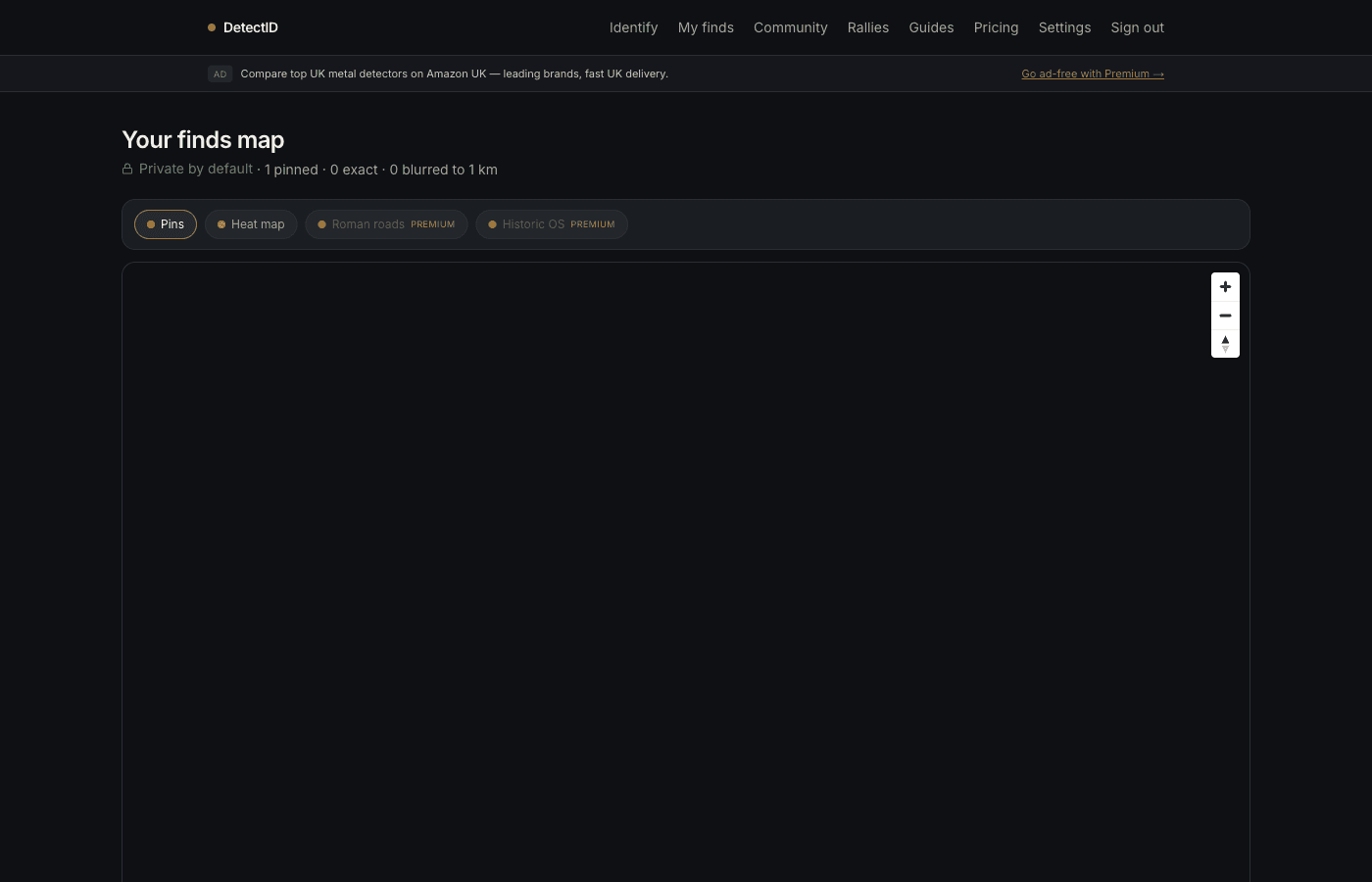
- Look at the stats strip on /finds — total finds, year-on-year if you’ve been on DetectID for more than a year, top ruler, Treasure Act flags.
- Pick your three favourite finds of the year. Share them publicly if not already.
- Note which permissions paid off and which didn’t. Plan accordingly.
- Check that any Treasure-flagged finds have been recorded with your FLO. The annual review is when these things get caught up.
Some detectorists post their “year in finds” on Facebook in early January using a screenshot of their DetectID stats strip. It’s organic marketing for the platform; we appreciate it. No obligation though.
What never goes out of season
- Reporting to PAS for pre-1700 finds.
- Respecting permission terms.
- Gentle cleaning, never aggressive.
- Sharing knowledge with newer detectorists.
- Recording precision honestly — 1 km grid for public, exact only for yourself.
Common questions
Does DetectID know what season it is?
Not in any algorithmic way. The platform doesn’t adjust based on season — the engine is calibrated across UK detecting year-round. The seasonal patterns in this post are about how to USE DetectID across the seasons, not about how the engine behaves.
Can I subscribe seasonally?
Yes — cancel after a productive autumn, re-subscribe in spring. Your collection stays. The only inconvenience is the new-card setup, which is a few clicks.
Are there seasonal rallies on the public /rallies page?
Yes — public rallies appear on /rallieswith their dates. Spring and autumn dominate. Worth checking each February and August for the upcoming season’s events.
Next steps
- Cleaning autumn’s finds: Cleaning hammered silver safely.
- Reporting to PAS: Reporting finds to PAS.
- Beach work: Beach detecting on DetectID.
Try DetectID on a real find
Upload a photo and we’ll return a calibrated shortlist with period, denomination, ruler and full reasoning chain.
Identify a find